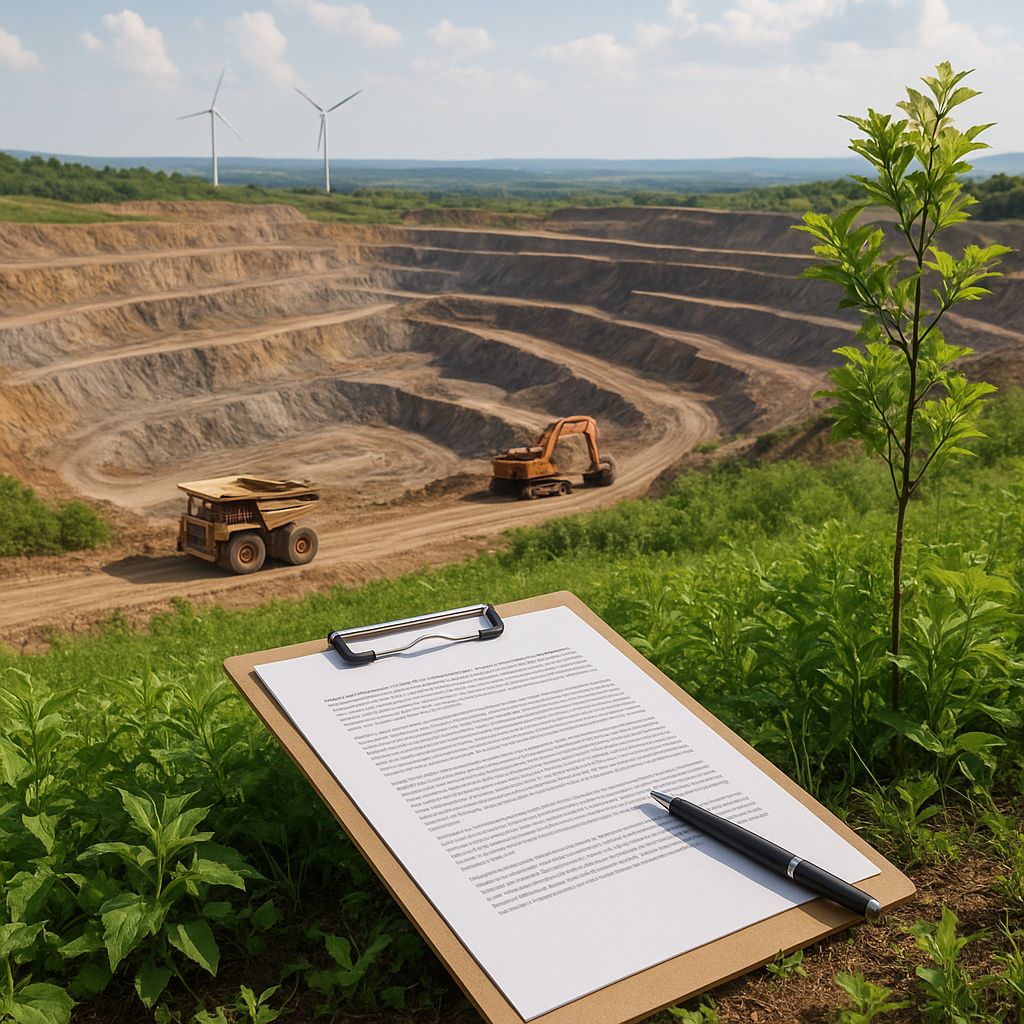
The accelerating demand for rare metals in high-technology sectors is prompting a reevaluation of existing policy frameworks to ensure sustainability in extraction and processing. As governments, corporations, and civil society grapple with the trade-offs between economic growth and environmental protection, the design of robust regulatory systems has emerged as a cornerstone of responsible resource management.
Governance and Regulatory Frameworks for Rare Metals Mining
Effective governance structures are essential for balancing national development goals with global environmental concerns. Regulatory approaches can range from strict licensing requirements and impact assessments to fiscal policies that include royalties and taxes earmarked for environmental restoration. A key component is the establishment of clear compliance mechanisms that enforce transparency and accountability across all stakeholders, from multinational corporations to local cooperatives.
New policy instruments often feature dynamic permitting processes that adapt to evolving scientific knowledge and market conditions. For instance, graduated licensing models can tie the size of an extraction concession to environmental performance metrics. This incentivizes companies to invest in best practices early in the project life cycle, rather than waiting for enforcement actions after violations occur.
Moreover, some jurisdictions are piloting impact-bond financing schemes. Under these arrangements, private investors fund environmental rehabilitation upfront, while governments or community trusts repay the bonds based on verified restoration outcomes. Such mechanisms align economic incentives with ecological integrity.
Environmental Impact Assessment and Biodiversity Protection
Comprehensive environmental impact assessments (EIAs) play a pivotal role in identifying and mitigating risks to biodiversity and sensitive ecosystems. Modern EIAs extend beyond physical disturbance to include chemical pollution, water table alterations, and noise emissions. They also adopt a landscape-level perspective, recognizing that rare metal deposits frequently lie beneath protected areas or corridors of high conservation value.
Mitigation hierarchies embedded in many policies prioritize avoidance of critical habitats, followed by minimization, restoration, and lastly offsetting. Offsetting can take the form of habitat banking, where developers purchase credits to fund conservation projects elsewhere. While controversial, well-designed offset programs can maintain or even enhance ecological networks if underpinned by rigorous monitoring and enforcement.
Climate change considerations are increasingly integrated into mining EIAs. Permafrost degradation, shifting precipitation patterns, and the risk of extreme weather events necessitate adaptive management strategies. Policy frameworks are evolving to require contingency planning, including flood defenses and water re-circulation systems, to bolster ecosystem resilience against climatic uncertainties.
Community Engagement and Social License to Operate
Securing a social license to operate has become non-negotiable for mining projects, especially in regions where indigenous communities hold customary land rights. Meaningful consultation processes are enshrined in many legal regimes, mandating free, prior, and informed consent (FPIC) for affected populations. In practice, this often involves multi-stage dialogues facilitated by independent mediators.
Policies now encourage profit-sharing agreements, community development funds, and local hiring quotas. When implemented transparently, these measures distribute economic benefits more equitably and foster long-term partnerships. However, tokenistic or rushed engagements can exacerbate tensions and provoke costly delays.
To enhance legitimacy, some governments require externally audited social impact studies and grievance redress mechanisms. By codifying participatory rights and dispute resolution processes, these regulations aim to transform community engagement from a mere box-ticking exercise into a collaborative platform for co-designing solutions.
Innovation, Technology, and the Circular Economy
Advances in extraction and processing technologies offer pathways to reduce the environmental footprint of rare metal mining. Techniques such as bioleaching, solvent extraction, and in situ recovery can limit land disturbance and chemical use. Policy frameworks that provide research grants, tax credits, or waived fees for pilot facilities accelerate the adoption of these innovative approaches.
The rise of a circular economy for rare metals further diminishes reliance on primary mining. Extended producer responsibility (EPR) schemes and urban mining initiatives target waste streams—from end-of-life electronics to industrial catalysts—to reclaim valuable elements. Regulations mandating product labeling, modular design, and take-back programs support closed-loop supply chains and reduce pressure on virgin ore bodies.
Public research partnerships also play a crucial role. Universities, national labs, and industry consortia collaborate on life-cycle assessments, materials substitution studies, and next-generation recovery processes. Policy incentives that mandate open data sharing and collaborative licensing ensure that breakthroughs benefit the wider sector rather than being locked behind proprietary barriers.
International Cooperation and Policy Harmonization
Given the global nature of rare metals markets, unilateral policies have limited efficacy. International cooperation frameworks seek to harmonize standards, reduce regulatory arbitrage, and prevent a “race to the bottom” in environmental and social safeguards. Multilateral agreements, such as those under the auspices of the United Nations or the OECD, offer templates for best practices and compliance monitoring.
Cross-border traceability systems are gaining traction. Blockchain-enabled registries can track ore from extraction through processing and end use, ensuring that only responsibly sourced materials enter strategic value chains. Trade agreements increasingly include provisions on conflict minerals, illegal mining, and supply chain due diligence, compelling signatories to uphold minimum benchmarks.
Financial institutions and development banks are also aligning their lending criteria with sustainability objectives. Green bonds, sustainability-linked loans, and export credit guarantees now require adherence to recognized standards for human rights, environmental impact, and transparency. By integrating these criteria into global finance mechanisms, policymakers reinforce the market incentives for more sustainable rare metals practices.